
Nemi is best known for its sweet little strawberries, its picturesque town, and the Museo delle Navi Romane. Yet just beyond the shores of Lake Nemi lie the remains of one of the area’s most fascinating, mysterious, and historic sites.
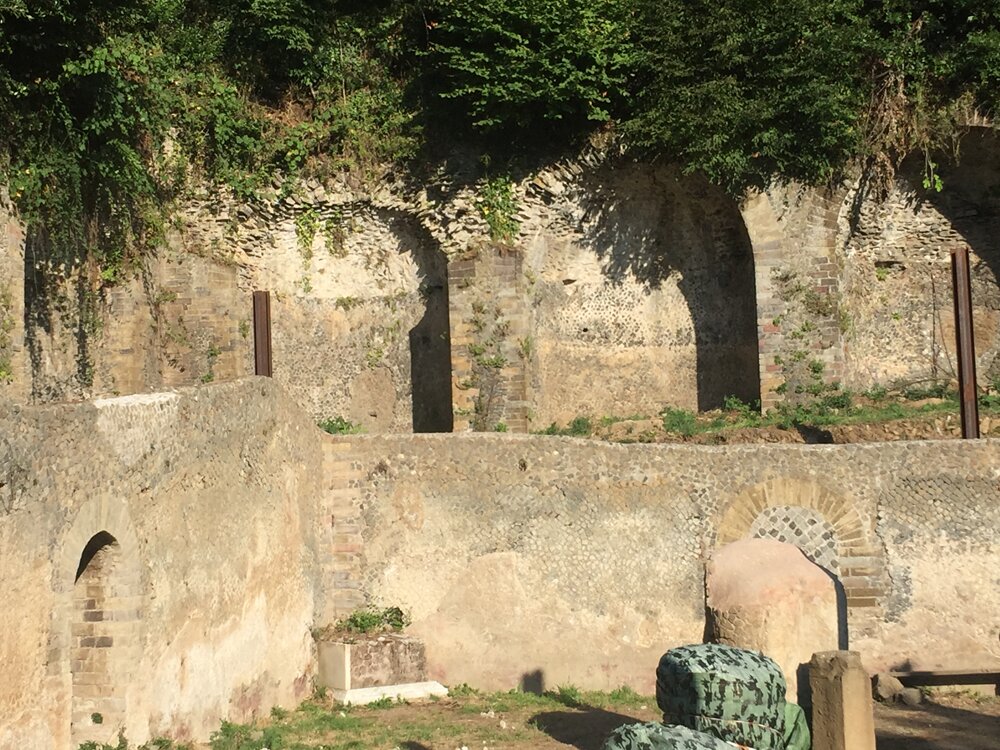
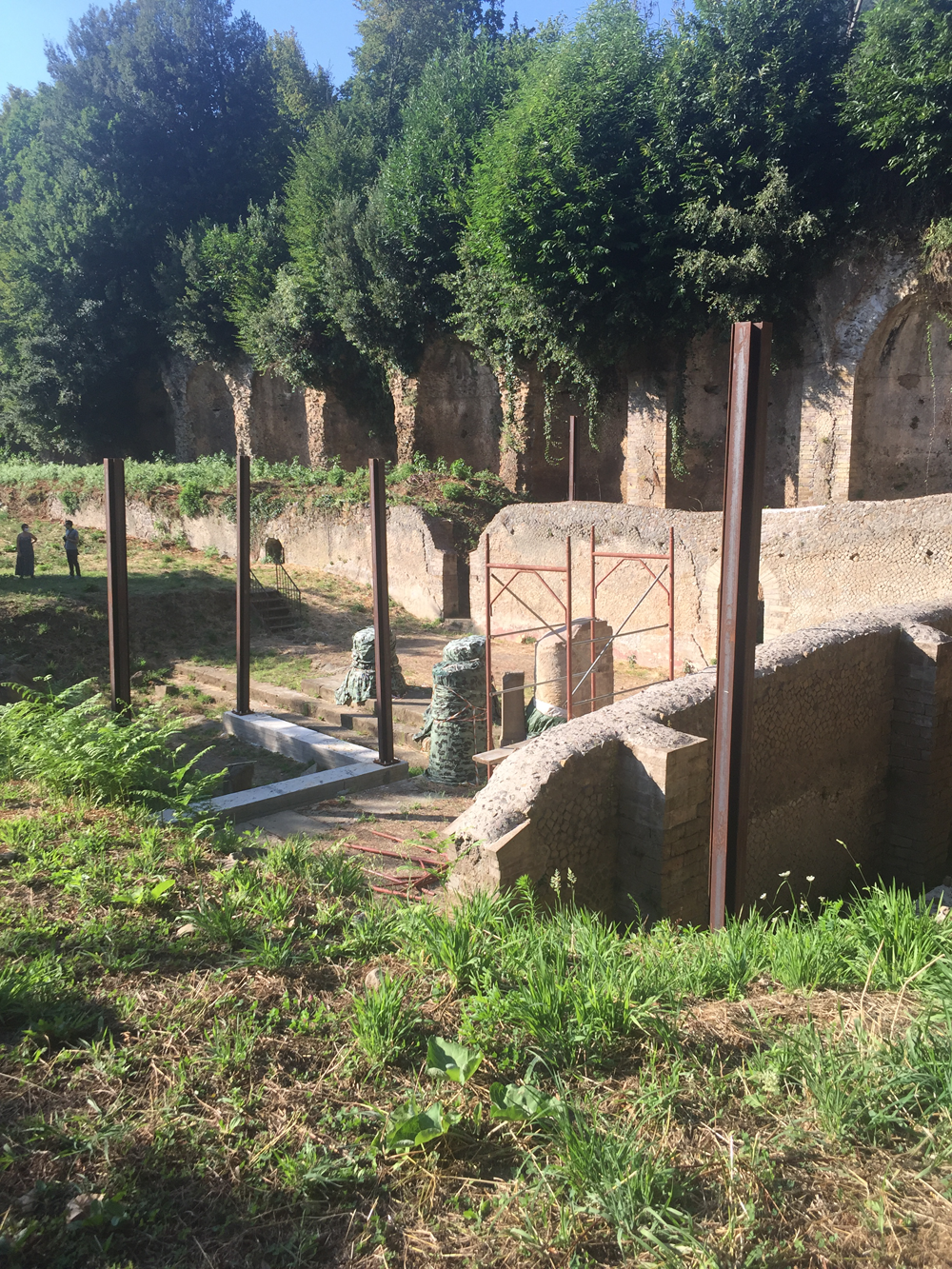
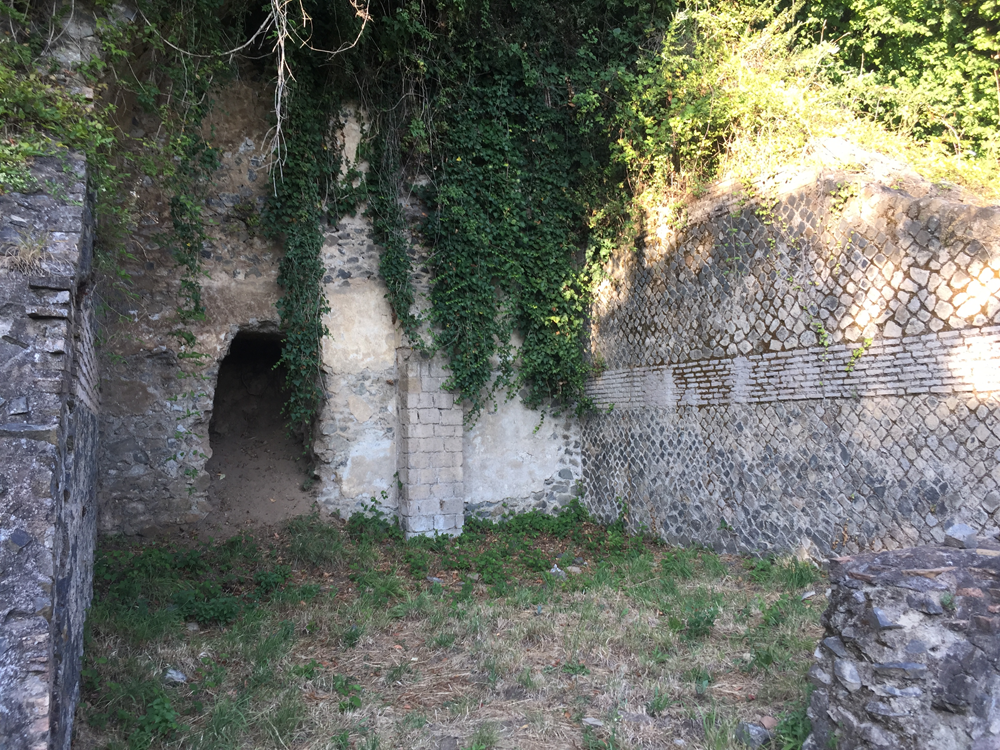
Dedicated to the goddess Diana, this ancient sanctuary has roots reaching back to the Bronze Age and once served as a major spiritual center. Spanning more than 45,000 square meters, the complex includes the ruins of Diana’s temple, a theater, a nymphaeum, and the so-called celle donarie—rooms where numerous votive statuettes were discovered.
Beyond the archaeological remains, it is the sanctuary’s rich mythology and history that make it captivating. This was the principal shrine of Diana Nemorensis, or “Diana of the Wood,” and the political and religious heart of the Latin League.
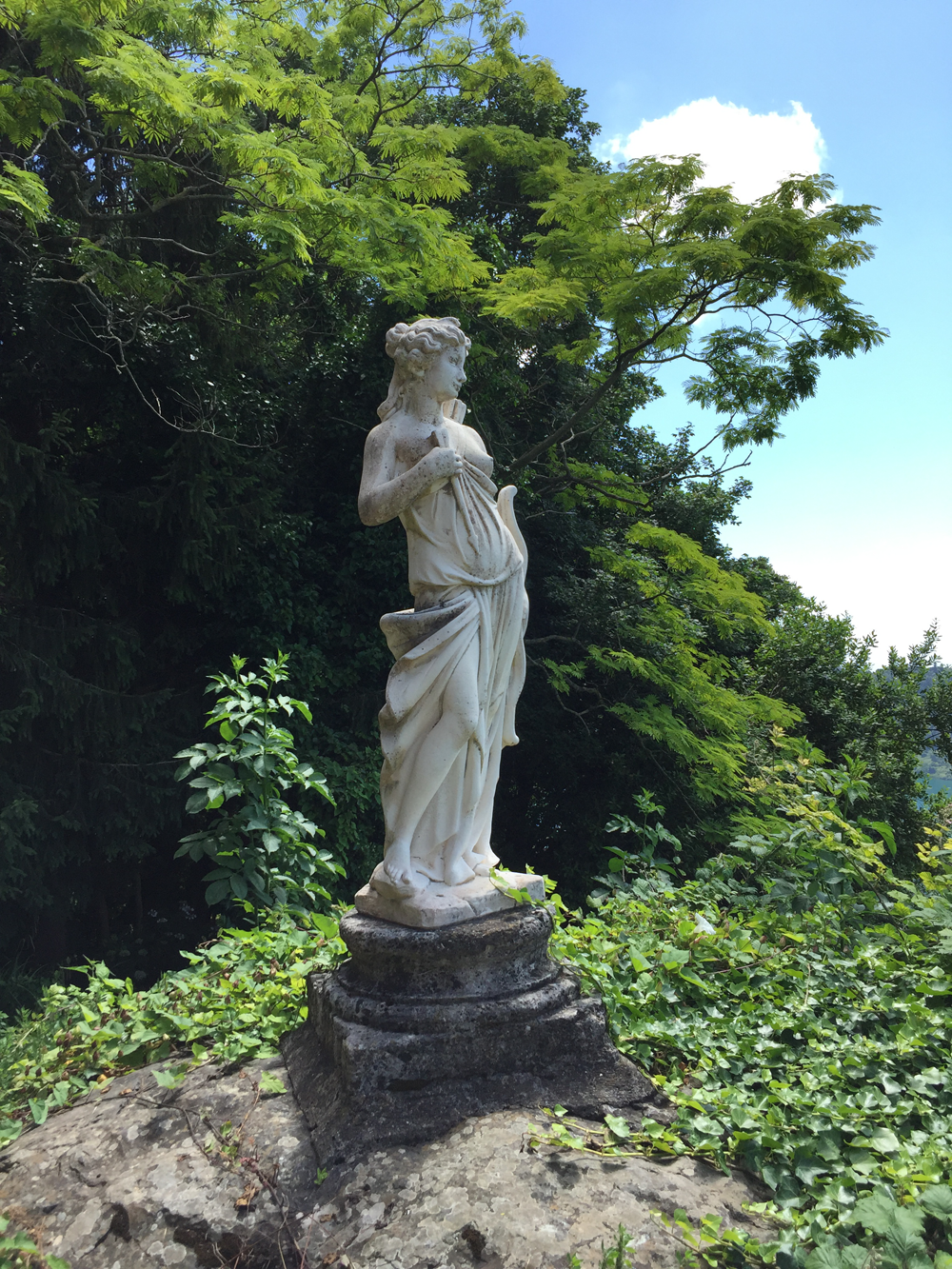
Diana takes on different roles and her influence is evident in Nemi and Lake Nemi, the latter also referred to as Speculum Dianae or “Diana’s Mirror".
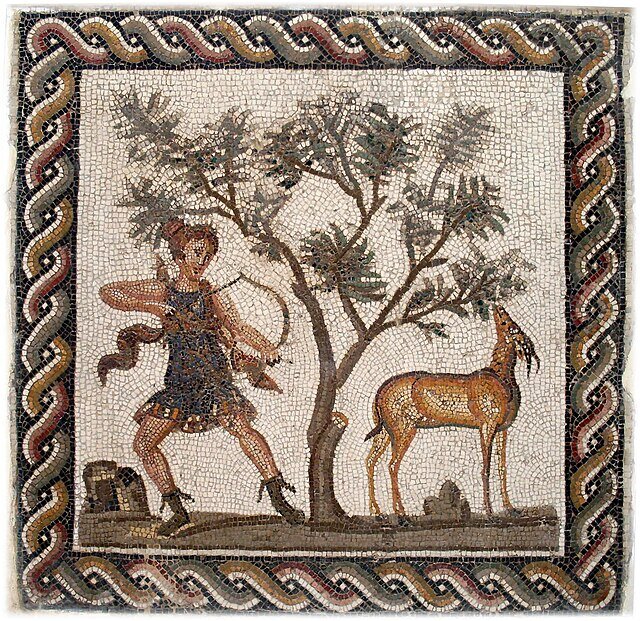
In addition to being the goddess of the hunt, wild animals, fertility, and the moon, she was revered as a protectress of hunters and as a divine figure invoked by those seeking pregnancy, safe childbirth, and other blessings of health and well-being.
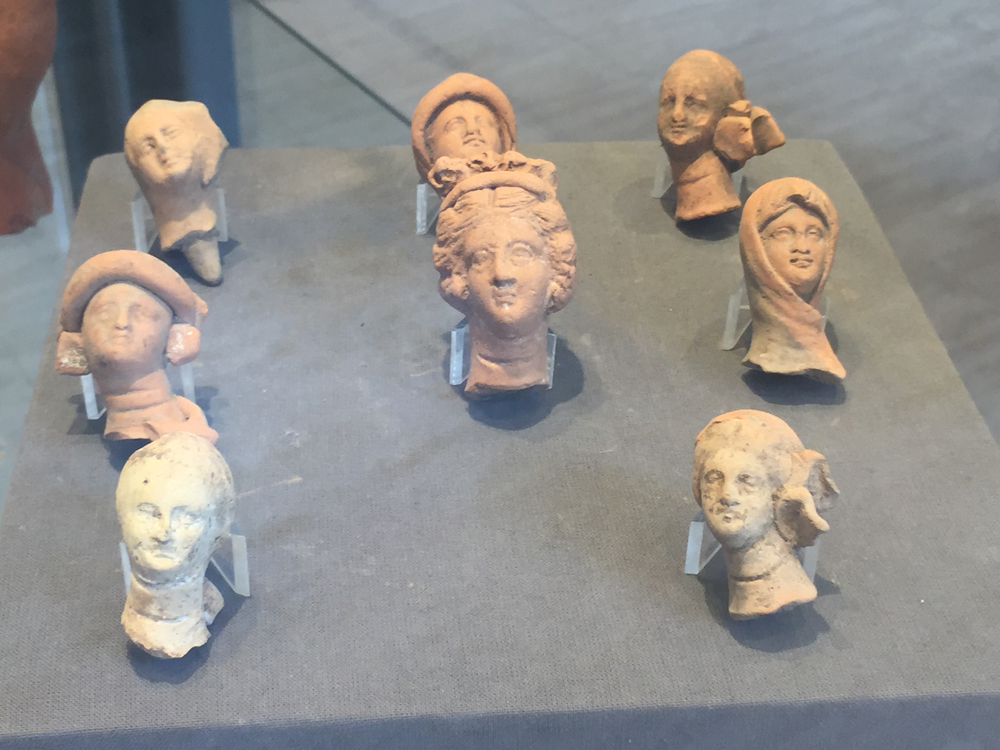
During excavations of the sanctuary, votive statuettes were found in the "celle donarie"; further proving her diverse roles as well as the sheer number of faithful pilgrims leaving offerings. Some of these votive offerings can be viewed at the nearby Museo delle Navi Romane (photo below).
On a darker note, Diana’s cult practiced violent religious rites. Legend goes her high priest was Rex Nemorensis, “king of the sacred grove”, a fugitive slave who succeeded his predecessor after challenging, and surviving, him in a fight to the death. Before the challenge, the lore claims he had to first pick a mistletoe branch from a guarded oak tree in the sacred grove. He would remain king as long as he could defeat his challengers and the fight resembled gladiatorial combat before an audience.
The Sanctuary was active until the 4th century AD, and eventually abandoned with the advent of Christianity, the Edict of Thessalonica and persecution of pagans in the late Roman Empire.
Excavations
Excavations of the area have been ongoing since the 1700’s, but often what is found is reburied to protect the structure. Of late, excavations are carried out by the University of Munich and the University of Perugia.
What you can see:
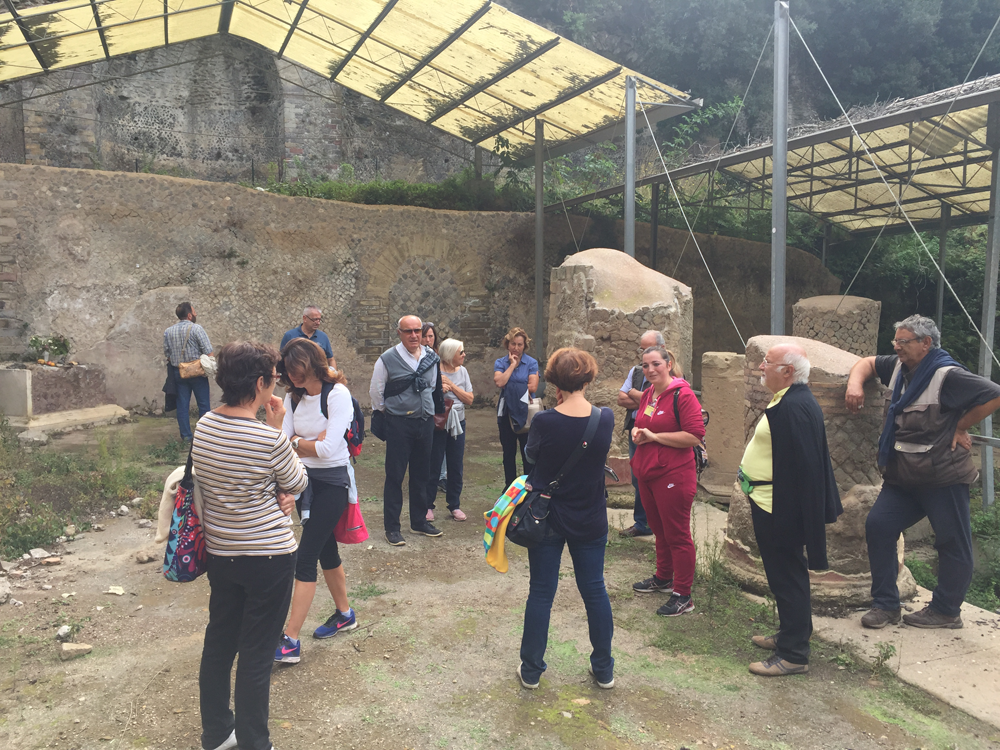
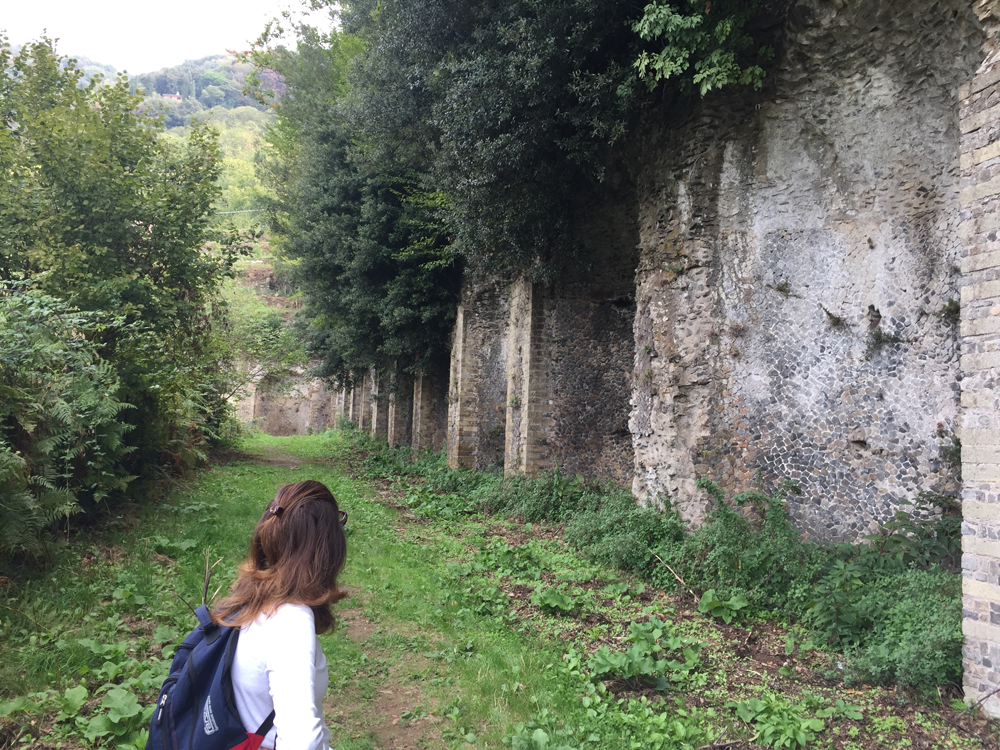
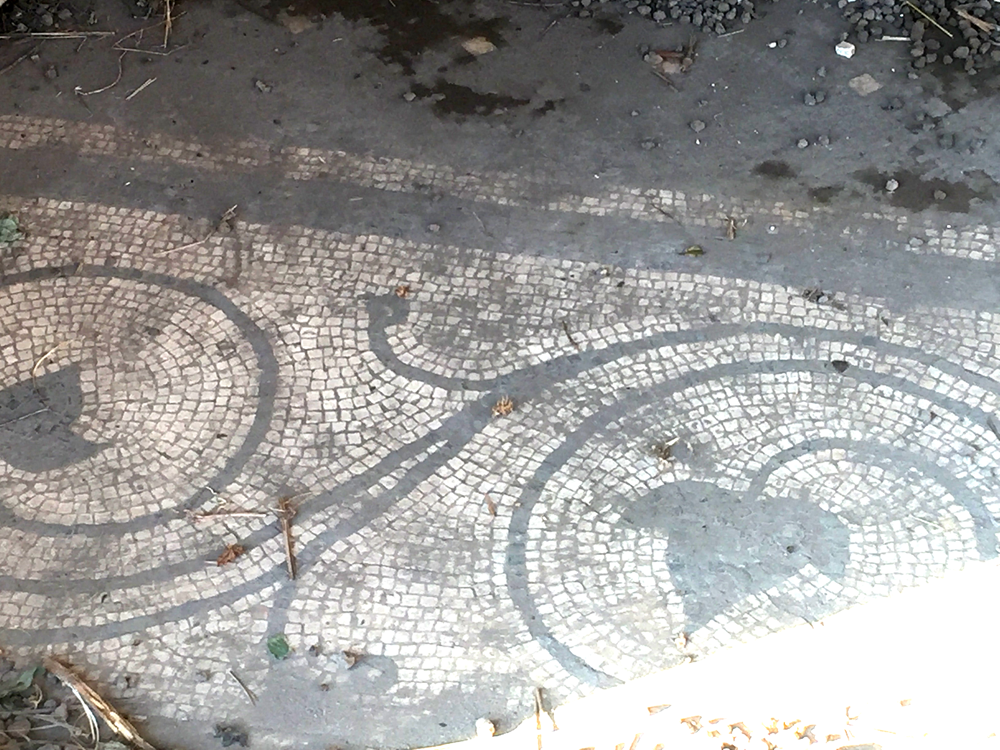
In addition to the impressive foundations with semicircular niches and a Doric portico with red-plastered columns, there are partial rooms, one of which having an intact mosaic floor.
How to visit:
The sanctuary is located half on private property and half on public land.
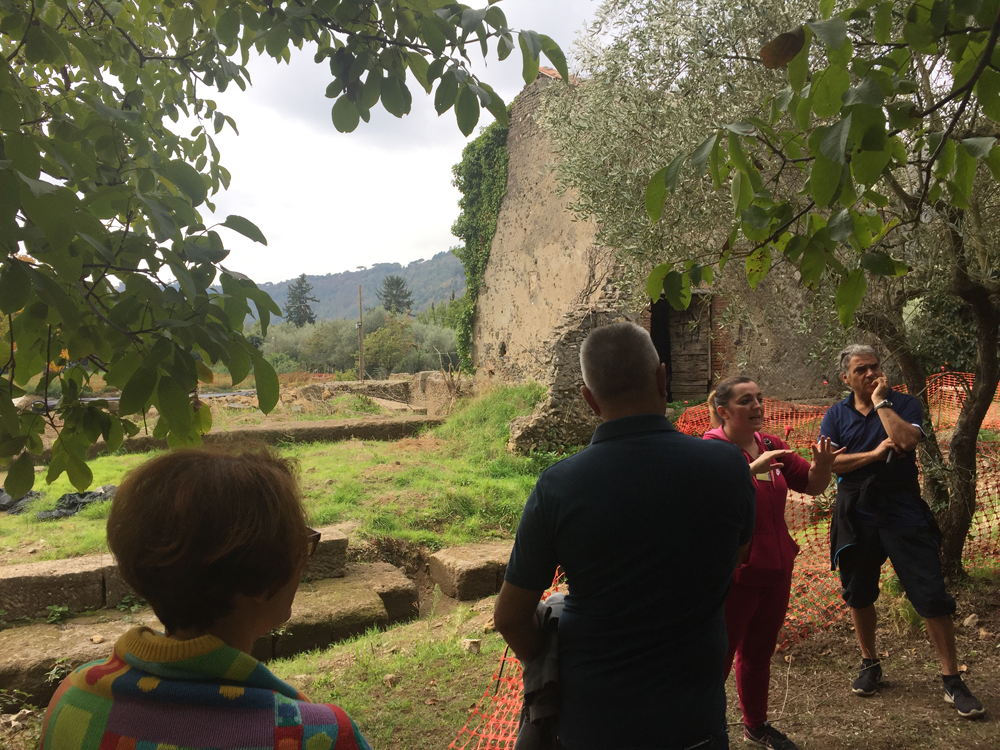
The public, or "niche side" entrance is behind locked gates, as the sanctuary can only be visited by contacting the Soprintendenza Archeologia, Belle Arti e Paesaggio of Roma. Guided tours are organized once every 2-3 months and are advertised by the Soprintendenza ABAP-RM-MET, the Municipality of Nemi and/or local archaeological associations such as GAALNA
These tours are usually free, in Italian language and a most informative way to see the sanctuary.
This entrance is right off the ring road which surrounds the lake, following the signs for Azienda Agricola Il Nemus and walking past their outdoor Teatro di Paglia.
You may see other signs around the lake directing you to the Temple of Diana which are in a different direction than the indications above; owners of an agriturismo (holiday farm) near the temple have installed these. They offer the chance to see the site from their property, usually by a fee or required use of their facilities. Authorities claim this is not permitted nor recommended, one reason being safety measures are not followed, use your own discretion.
Some go on their own though passable spaces through the locked gates. You can see their evidence by offerings left on the altar: It is rumored neo-pagans and those seeking fertility have ceremonies during the night. These types of visits are not advised and border on being illegal.
I Nemoralia
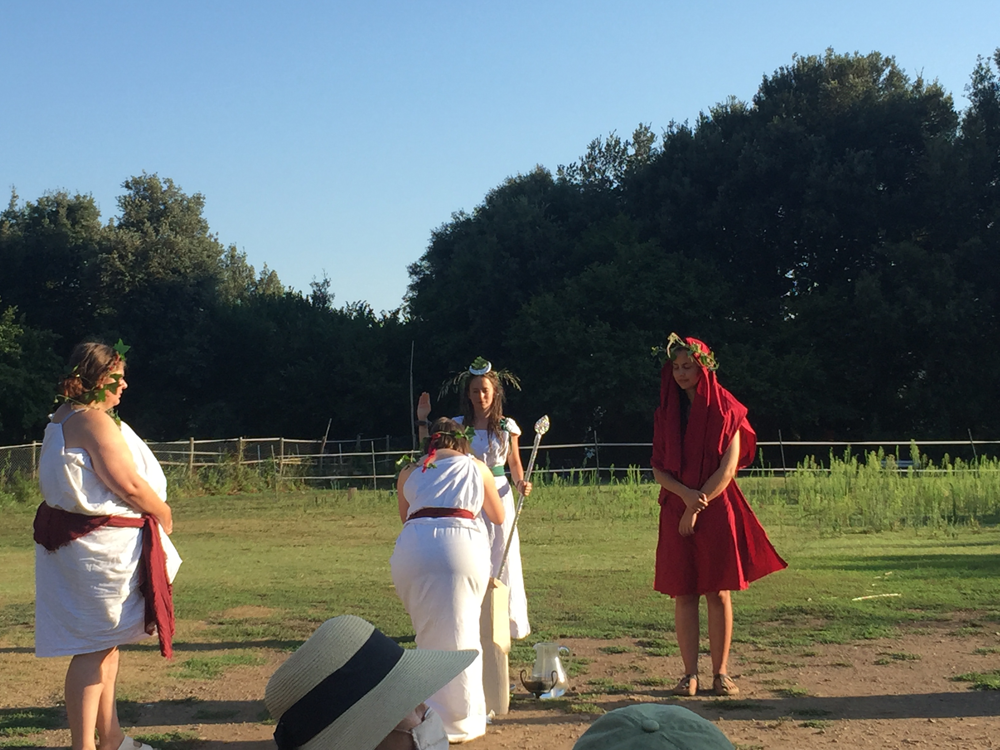
A most interesting time to visit is in August, when there is I Nemoralia, also known as the Festival of Diana. Once an ancient Roman holiday celebrated in the Sanctuary of Diana in honor of the goddess, the tradition lives on today as a multi-day event featuring historical reenactments and ceremonies inspired by those once performed at the sanctuary.